
Malaysia’s New Social Media Rules: Safety, Control and Free Speech
According to the new regulations of the Malaysian Communications and Multimedia Commission (MCMC) to be implemented in June 2026, social media platforms must take age verification measures to confirm the age of users. , and restrict teenagers under the age of 16 from registering new social media accounts. This measure is part of the Framework of the Online Safety Act 2025, which aims to strengthen network security management and reduce the risk of minors being exposed to harmful content. But it also sparked discussions about privacy, freedom of expression and government control in the digital age.
In addition to age verification requirements, the new regulations also require platform owners to strengthen the supervision of network content, including the establishment of a risk management mechanism, timely handling of harmful content, and improving user protection measures. The government said that these measures are necessary to prevent victimization of minors through acts such as cyberbullying and harassment, online fraud, the dissemination of false information and the network security of minors.
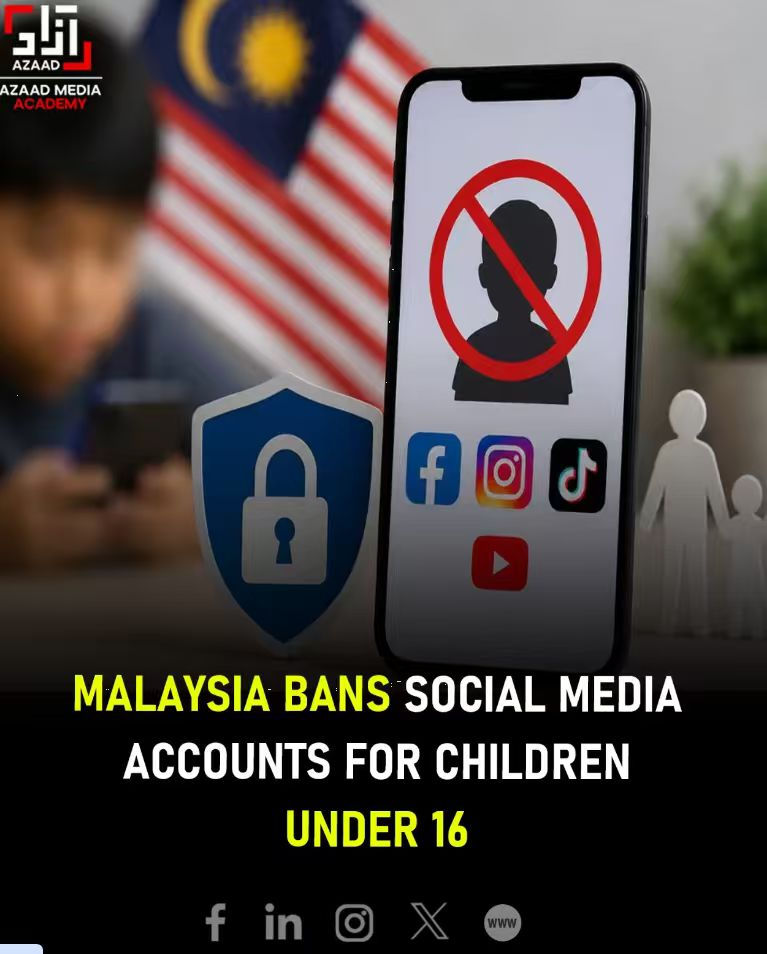
Photo caption: A poster stating that the new laws in Malaysia restrict the use of social media by teenagers under the age of 16. Photo source: https://www.instagram.com/p/DZM6YLjAfaU/?utm_source=ig_web_button_share_sheet
The Malaysian Communications and Multimedia Commission (MCMC) pointed out that as social media gradually becomes an important platform for the public to obtain information, exchange and express opinions, the establishment of a more perfect network security system has become a necessary measure to ensure that digital space can provide users with a safer usage environment.
Although the government emphasizes security, some content creators, students and media observers are worried that the reduction of online anonymity involves a series of user privacy issues and will reduce the space for freedom of speech, causing people to begin self-censorship, which is not conducive to the free media atmosphere.
“I understand the need to protect children online, but I worry about how personal information will be used during the verification process,” said Taylor’s University student Han JiaTong.
“Many creators are becoming more careful about what they post. Even if they do not break any laws, they may avoid discussing sensitive issues,” said instagram content creator @isabel.
Isabel said that after the implementation of the new regulations, they will choose to publish content more carefully. Although they understand the importance of strengthening network security, they are also worried that under unclear boundaries, creators may choose to avoid discussing sensitive issues, dare not comment on political issues, dare not forward sensitive news, and dare not express controversial views. So as to limit the public discussion space.
As social media gradually replaces traditional media as an important channel for the public to obtain information, any regulatory measures against online platforms may affect the way the public participates in social discussions. In the past, people mainly got news through newspapers and television. Nowadays, TikTok, Instagram, X and Facebook have become important platforms for many young people to obtain information, express their views and participate in public discussions.
At the same time, many people have expressed concern about the age verification measures. They are concerned about how personal identity information will be saved, whether the data is secure, and whether the platform will collect more user data. Some netizens believe that age verification helps to protect minors, but it may also bring problems in personal data protection and privacy security.
Wathshlah G., Executive Director of the Centre for Independent Journalism (CIJ). said in a report by Borneo Post,“ while ensuring the safety of users, network supervision measures should also comply with the principles of transparency, fairness and necessity. ”She pointed out that although freedom of speech is not an absolute right, any restrictions should have a clear basis and avoid excessive impact on the normal expression of opinions by the public.
A joint statement issued by ARTICLE 19, an international organization for freedom of speech, and the Centre for Independent Journalism (CIJ) on the Online Safety Bill pointed out that some definitions are too broad. Control provisions may lead to the deletion of legal content and have a chilling effect on public expression. The organization believes that while strengthening network security, it is also necessary to ensure the public's right to participate in public discussions and access information.
As Malaysia enters a new stage of network supervision, how to strike a balance between network security, personal privacy and freedom of speech is still an important issue of social concern. While many people support strengthening the protection of minors, it remains to be seen how these measures will affect the future digital communication environment and public discussion space.


Comments